

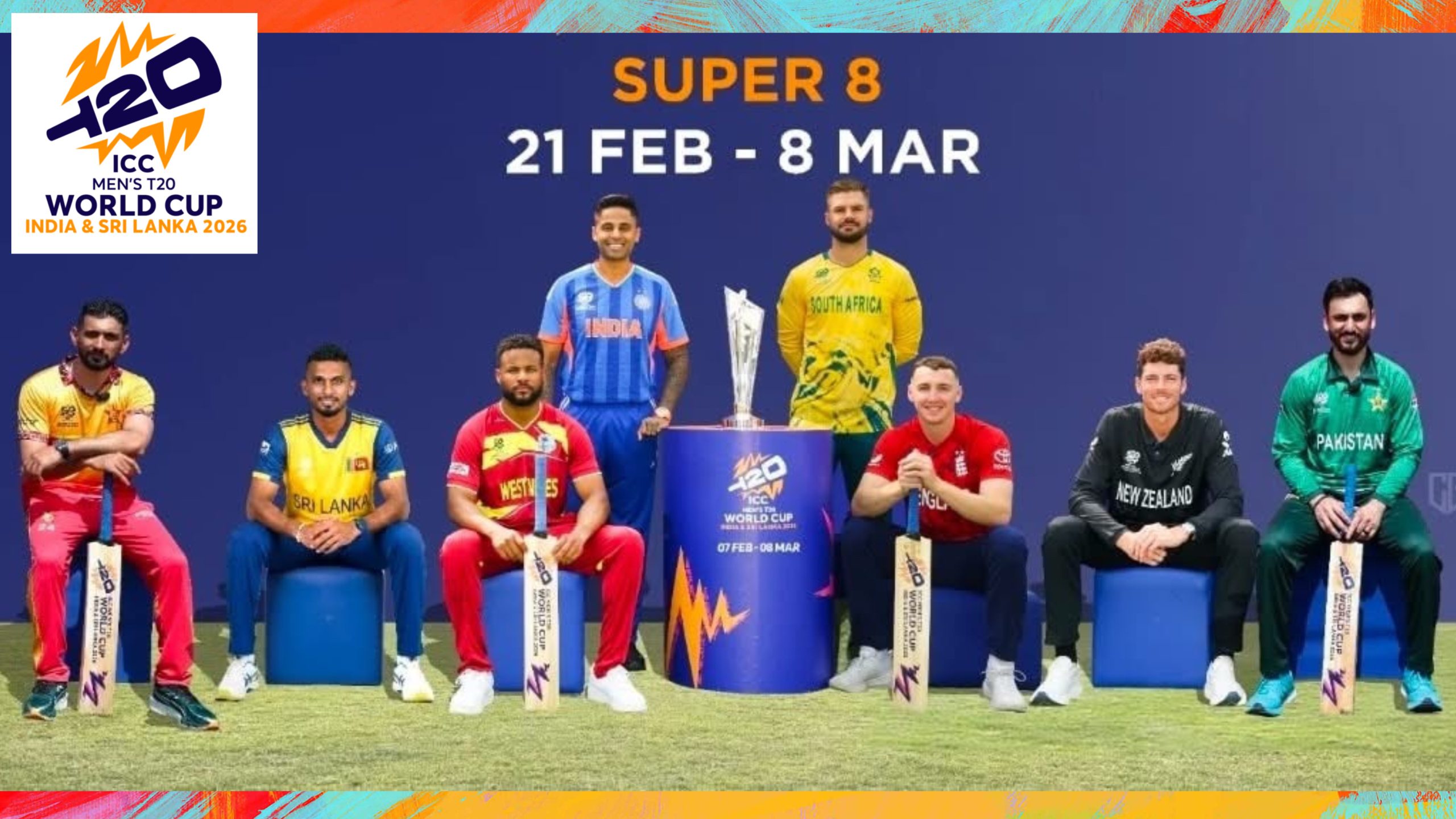
The Super 8 stage has always been one of the most exciting phases of the ICC T20 World Cup. After the intense group stage battles, only the top-performing teams move forward to the second round, where the competition becomes even more competitive and unpredictable.
Teams Selected for Super 8
In the latest ICC T20 World Cup edition, the following teams successfully qualified for the Super 8 stage after finishing in the top positions of their respective groups:
- India
- Australia
- England
- South Africa
- West Indies
- Pakistan
- Sri Lanka
- New Zealand
These teams demonstrated consistency, strong net run rates, and the ability to handle pressure in crucial matches. Some teams dominated from the start, while others had to fight until the final group match to confirm their place.
The Super 8 format divides the eight qualified teams into two groups of four. Each team plays the other three teams in their group, and the top two teams from each group advance to the semi-finals. This structure ensures high-quality contests and reduces the margin for error.
Why the Super 8 Format Faced Criticism
Despite the excitement, the Super 8 format has faced criticism from fans, analysts, and former players.
1. Lack of Clarity
Many fans felt that the qualification path and group reshuffling were confusing. In some tournaments, pre-determined seeding affected group placements rather than fresh draws after the group stage.
2. Scheduling Concerns
Critics argued that certain teams had scheduling advantages, such as more rest days or playing at familiar venues. This raised debates about fairness and competitive balance.
3. Repetitive Matchups
Another complaint was that some teams ended up playing the same opponents again within the same tournament, reducing the freshness of fixtures.
4. Impact on Associate Teams
Smaller cricketing nations often find it difficult to progress beyond the group stage due to the limited number of Super 8 spots. Some experts believe expanding the knockout stage would give emerging teams more exposure.
ICC’s Perspective
The ICC introduced the Super 8 system to ensure more high-profile matches between top teams, increasing global viewership and commercial value. From a competitive standpoint, it ensures that only consistent teams move forward to the semi-finals.
While criticism exists, the format also guarantees thrilling contests, as every match in the Super 8 stage carries semi-final-level intensity.
Conclusion
The Super 8 stage remains one of the most exciting parts of the ICC T20 World Cup. While debates about format fairness and scheduling continue, fans around the world eagerly watch as the best teams battle for a place in the semi-finals.
As cricket continues to grow globally, the structure of tournaments may evolve — but the drama and passion of the Super 8 stage will always remain unforgettable.